
Solar Wind: Comprehensive Description and In-Depth Insight - Cosmic Weather Lexicon
The solar wind, a continuous stream of charged particles emanating from the Sun, poses potential threats to our technology, infrastructure, and astronauts in space. Understanding its nature and effects on Earth is crucial for taking protective measures against these dangers.
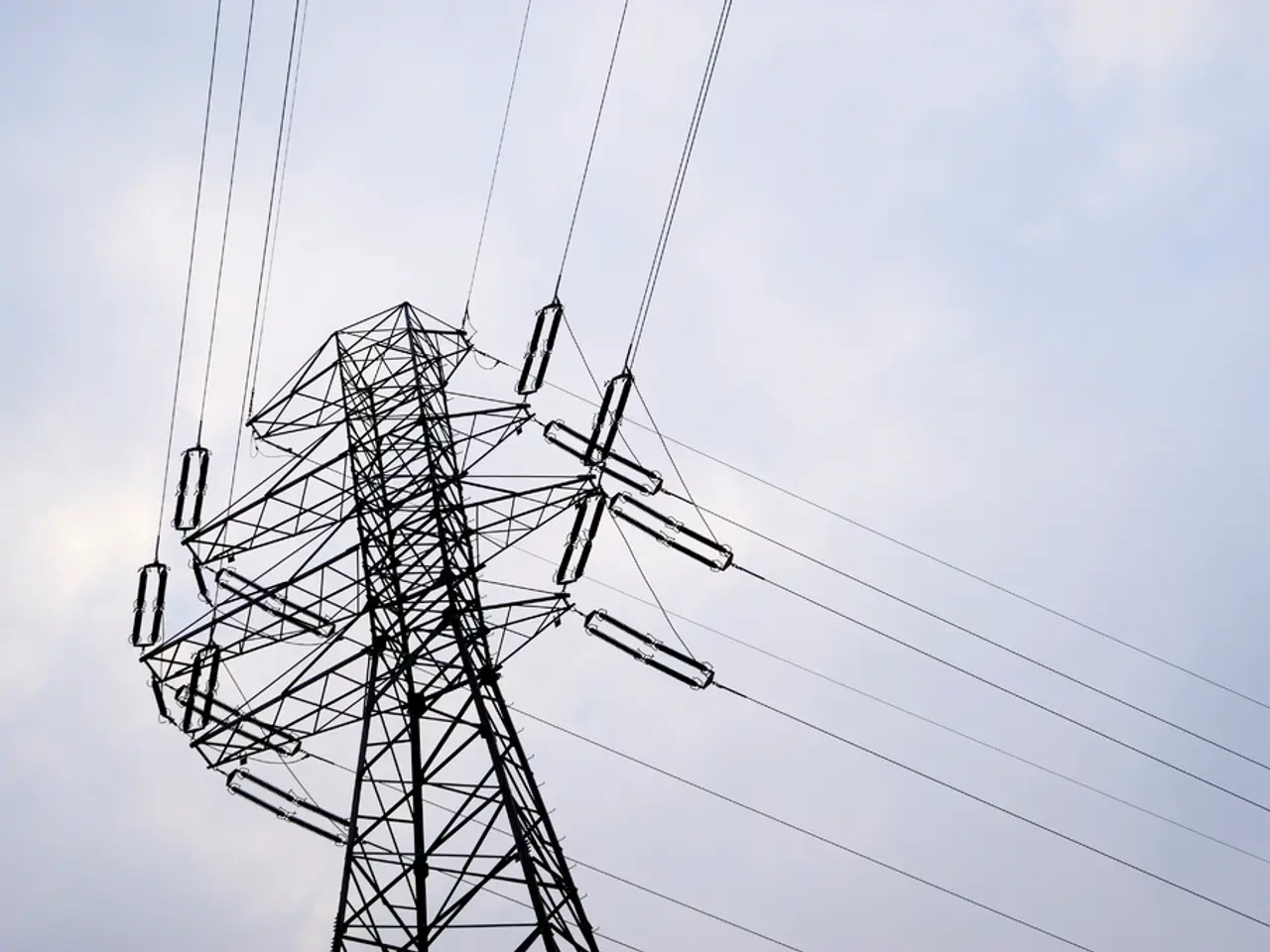
Geomagnetic storms, caused by the solar wind, can disrupt power grids, satellite communications, and GPS systems. The potential impacts of solar wind on Earth include geomagnetic disturbances that can lead to power outages like the 1989 Quebec blackout, damage satellites, cause radio blackouts, and interfere with GPS navigation. Solar wind compresses Earth's magnetosphere and induces electrical currents that can overload transformers; intense solar storms can also heat and expand the upper atmosphere, increasing drag on satellites and potentially leading to their loss.
Fortunately, a combination of Earth's magnetic shield, advanced monitoring and forecasting, infrastructural safeguards, and operational adjustments form the principal defensive strategies against solar wind impacts on Earth and technology.
Earth’s magnetosphere deflects most solar wind particles, with auroras as a visible consequence of particles entering near the poles. To monitor solar activity and provide forecasts of solar storms, space-based observatories such as NASA’s Solar Dynamics Observatory (SDO) and SOHO continuously monitor the Sun. Space weather centers like NOAA’s Space Weather Prediction Center use this data to give advance warning.
Operators of power grids can reduce transformer loads, temporarily disconnect vulnerable lines, and use devices like STATCOMs to stabilize voltage and divert damaging currents during storms. In the realm of satellite design and operation, satellites are engineered to withstand space weather, while operators may adjust or delay launches or satellite operations based on forecasts.
As the atmosphere’s response to solar storms changes due to rising CO₂ levels, more dramatic atmospheric density increases may aggravate satellite drag. To protect against the potential dangers of solar wind, strategies include improving forecasting and early warning systems, as well as equipping spacecraft and satellites with shielding and other protective measures.
One of the most important tools for studying the solar wind is the Solar and Heliospheric Observatory (SOHO), a joint mission between NASA and the European Space Agency. Equipped with a suite of instruments, SOHO can measure the speed, density, and composition of the solar wind as it travels towards Earth.
By studying the solar wind, developing early warning systems, and implementing protective measures, we can better prepare for the challenges posed by this dynamic and powerful force of nature. However, the threats posed by solar wind are not just limited to technology and infrastructure. Astronauts in space are vulnerable to the effects of solar wind, particularly high levels of radiation, which can increase the risk of cancer and other health problems on long-duration missions.
In conclusion, understanding the solar wind and its effects on Earth is vital for our safety and the continued operation of technology. With advanced monitoring, forecasting, and protective measures, we can mitigate the risks posed by this cosmic stream and ensure the continued success of our space-faring endeavours.
Environmental science and space-and-astronomy are crucial fields as they help us understand the nature and effects of the solar wind on Earth, and in predicting its potential impacts on technology, infrastructure, and even astronauts in space. To minimize the risks posed by solar wind, strategies include using technology like Earth's magnetic shield, advanced monitoring and forecasting systems such as NASA's Solar Dynamics Observatory (SDO) and the Solar and Heliospheric Observatory (SOHO), implementing protective measures in infrastructure and spacecraft, and adjusting operations based on forecasts.