Discussion about a satellite-based toll collection system necessitates careful discussion on security and privacy concerns
FASTag Annual Pass to Launch on August 15: A Step Towards Seamless Toll Collection on National Highways
The Indian government is set to introduce a new development in the electronic toll collection (ETC) system on national highways with the launch of the FASTag annual pass. This pass, available for purchase from August 15, is part of the government's aim to implement a barrier-free Multi-Lane Free Flow (MLFF) based ETC system [1].
The FASTag annual pass, priced at ₹3,000, is valid for one year from the date of purchase or 200 toll transactions, whichever comes first [2]. It can be purchased from the NHAI or MoRTH portal, or the Rajmargyatra application.
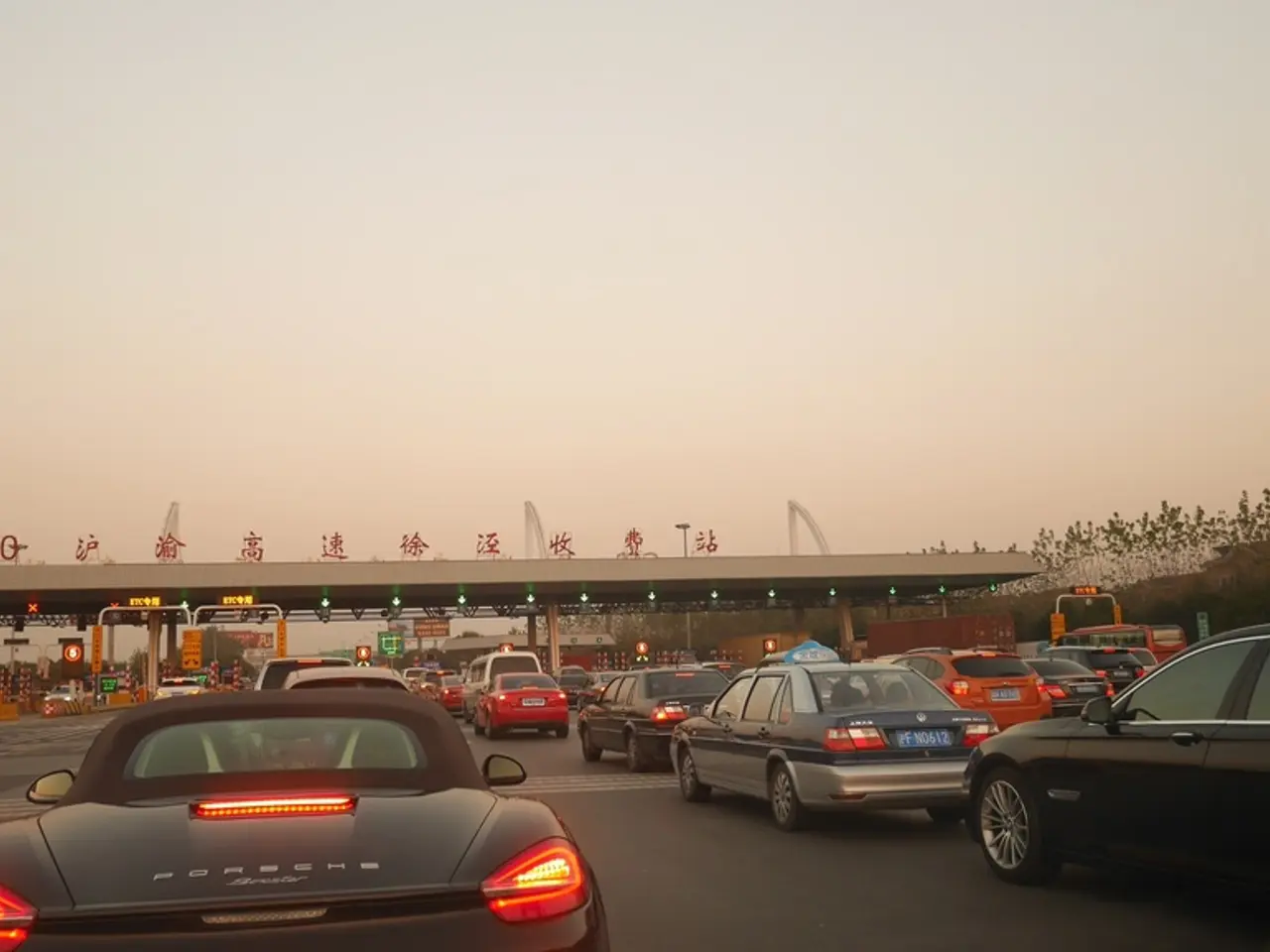
The FASTag annual pass does not affect the expectation that the satellite-based system will make travel through toll plazas faster than the current FASTag-based system [3]. The satellite-based system, using available technology at selected sections of national highways, charges user fees without requiring vehicles to stop, slow down, or stay in a given fee plaza lane, in addition to FASTag [4].
The satellite-based ETC system, while not yet operational on national highways in India, is under consideration with ongoing deliberations primarily concerning security, privacy, and operational control issues [1][2]. In contrast, the current system deployed widely is the FASTag-based system, which uses RFID technology for toll payments and is mandatory across over 750 toll plazas nationwide [3][4].
Implementation Status and Comparison:
- Satellite-Based ETC System: The government aims to deploy a barrier-free MLFF tolling system using satellite technology to enable seamless and faster toll collection without physical toll plazas [1]. A high-level panel has recommended further discussions on security and privacy before rolling out satellite-based tolling nationwide [1]. No national highways currently have this system operational [1][2].
- FASTag-Based System: Established and widely implemented, FASTag uses RFID stickers on vehicles linked to prepaid accounts, enabling automatic deduction of toll charges without stopping [3][4]. Recently, the government has initiated ANPR (Automatic Number Plate Recognition) combined with FASTag to enable barrier-less, free-flow tolling on specific highway corridors as an interim step toward MLFF tolling [2]. The FASTag system is strictly enforced with updated rules (such as penalties for insufficient balance and mandatory KYC linking) to maintain efficiency and compliance [3]. Though robust and well-established for toll collection, FASTag’s adoption outside toll plazas remains limited, and transaction volumes have plateaued [5].
The government aims to implement the satellite-based system to bring more transparency to the toll collection system on national highways and national expressways [6]. A Request for Proposal (RFP) to implement the barrier-less tolling system has been invited/finalised [7]. The FASTag annual pass is available only for private passenger vehicle users and is claimed to reduce travel costs for users [2].
In summary, the satellite-based ETC system is a planned future upgrade aiming for more efficient and transparent tolling on Indian national highways, while the existing FASTag system is currently the mainstay of electronic toll collection, with some pilot projects integrating ANPR to achieve barrierless free-flow tolling [1][2][3][4].
[1] The Economic Times [2] The Hindu [3] Financial Express [4] Livemint [5] Business Standard [6] The Times of India [7] The Indian Express
The introduction of the FASTag annual pass in the transportation industry marks a significant step in integrating the finance sector, with the pass priced at ₹3,000, as part of the government's ambition to enhance technology in the toll collection system on national highways. In the long run, the planned satellite-based ETC system, under consideration by the government, envisions a barrier-free and swift transportation system, utilizing technology to facilitate seamless, toll collection without the need for physical plazas.