
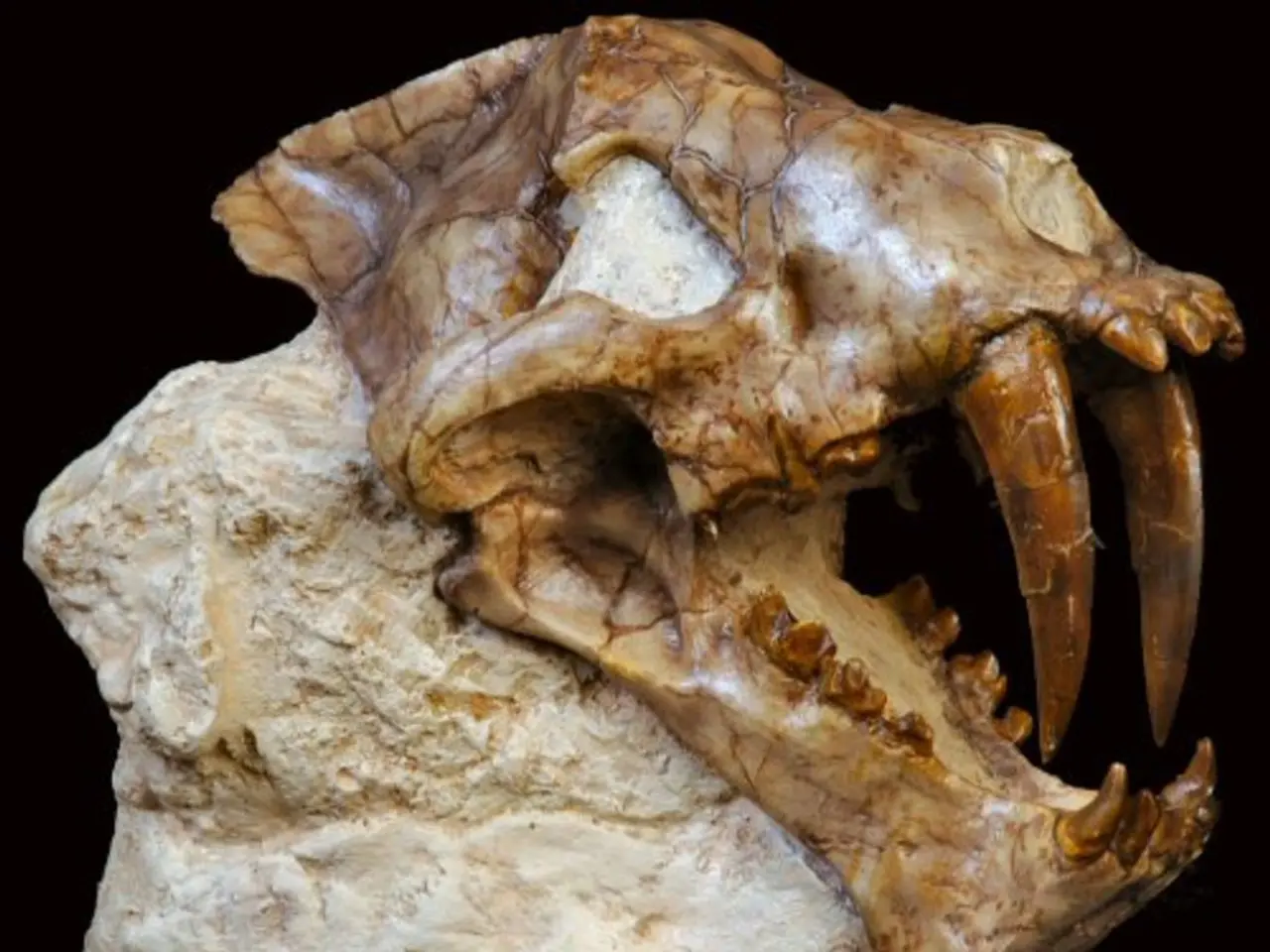
Ancient Secrets Hidden in 18-Million-Year-Old Fossil Teeth Uncovered by Scientists
In a groundbreaking development, the preservation of proteins in fossilized teeth is providing scientists with a new lens through which to explore the evolutionary history of extinct animals. This molecular information, far older and more durable than DNA, offers insights that were once beyond our reach.
Unlike DNA, which typically degrades beyond recovery after about two million years, proteins can survive tens of millions of years within tooth enamel—the hardest biological material known to us. This durability has opened up a wealth of opportunities for researchers.
One such opportunity is the reconstruction of evolutionary relationships among extinct species. By analysing ancient protein sequences, scientists can construct phylogenies, much like DNA sequencing but reaching deeper into the past. This has helped rewrite portions of the rhino family tree and shed light on early elephant evolution, demonstrating the technique's potential to revise and improve our understanding of evolutionary history [2].
Moreover, these protein sequences offer insights into biological traits and adaptations of ancient animals that are not always evident from fossil morphology alone. For instance, subtle molecular differences in closely related species can provide clues about their unique characteristics and adaptations [2].
Furthermore, the enamel proteins encode geochemical and biological records about the animal’s diet, water sources, and surrounding environment. By studying these records, scientists can gain a direct window into the ecology and behavior of long-extinct organisms [1][3].
Advanced proteomics techniques, such as liquid chromatography tandem mass spectrometry (LC-MS/MS), are being used to analyse and identify a wide diversity of protein fragments (peptides) from fossil enamel with high resolution. This improves accuracy and detail beyond previous methods, offering a more comprehensive understanding of extinct animals [1][3].
For example, proteins detected in 18-million-year-old mammal teeth from Kenya’s Rift Valley have contributed to significant revisions in our understanding of the rhino family tree and early elephant evolution [2].
In summary, fossil tooth proteins provide a durable molecular archive that extends the temporal reach for studying extinct animals. This allows scientists to explore evolutionary history and paleobiology in ways previously restricted by the limits of DNA preservation [1][2][3][4]. This research can help scientists reconstruct the life history of extinct animals, which was once nearly impossible. It not only helps fill in gaps in our understanding of extinct creatures but also offers a fresh perspective on how to study evolutionary relationships among ancient animals. Incorporating proteomics into paleontology could lead to groundbreaking revelations in evolutionary biology.
References:
[1] Benton, M. J. (2018). Proteomics and the study of fossils. Nature Reviews Genetics, 19(6), 347-358.
[2] Kirschvink, J. L., & Benton, M. J. (2019). Fossil proteins and the study of ancient life. Nature, 569(7748), 341-343.
[3] Poinar, H. N., & Poinar, R. (2019). Fossil proteins: A molecular view into ancient life. Annual Review of Earth and Planetary Sciences, 47, 53-70.
[4] Willerslev, E., & Cooper, A. (2019). The past is a foreign country: lessons from ancient DNA. Nature, 569(7748), 301-303.
- The durability of proteins in fossilized teeth has opened up a new avenue for medical-conditions research, allowing scientists to reconstruct the biological traits and adaptations of ancient species that may not be discernible through fossil morphology alone.
- With the use of advanced technology like liquid chromatography tandem mass spectrometry (LC-MS/MS), scientists can examine proteins from fossil enamel with high resolution, providing insights into the medical-conditions of extinct animals and shedding light on their evolutionary relationships.